Organisational design deep dive: the experimental write-up
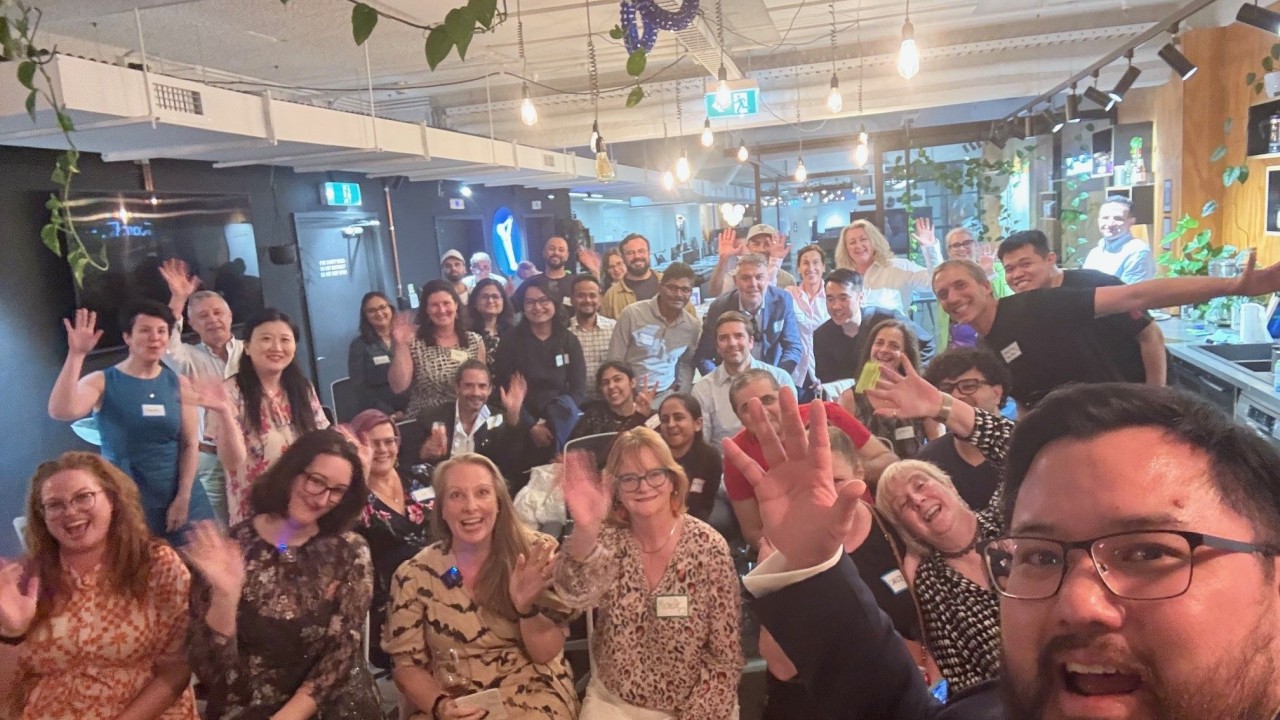
On Wednesday 16 April 2025, Megan Tyler and Ashley Coleman-Bock joined the Melbourne Agile Project Managers Meetup for a deep dive into organisational design and operating models. There was strong interest from the community — so here is an experiment: a long-form write-up for those who could not attend.
Huge thanks to Peter Lam and Claritas Consulting for organising, and TeamForm for sponsoring the meetup’s location, food, and drink.
Ninety minutes of content in 2,000 words? Read on.
Introduction and context — link to business agility
The session opened by acknowledging strong audience interest in organizational design and operating models, particularly in the context of improving business agility. Megan and Ash emphasized that true organizational agility requires more profound transformation than superficial structural changes such as renaming roles, reshuffling teams, or simply adopting agile terminology like “tribes” and “chapters.” Rather, genuine agility demands deeply integrated, strategically aligned approaches across people, processes, governance, technology, and metrics.
In March, the previous meetup had highlighted that superficial attempts at agility fail due to inadequate attention to the complex dynamics operating “between the boxes” — the interdependencies, processes, and relationships among different organizational units.
Defining organizational design and operating models
Organizational design was defined as the thoughtful alignment of strategy, structure, processes, governance, and ways of working to optimize performance and responsiveness. Operating models were explicitly differentiated from mere organizational structure, encompassing how businesses configure resources, capabilities, processes, technologies, and people to execute their strategies effectively.
The presenters revisited Jay Galbraith’s Star Model, highlighting its enduring usefulness. The model identifies five critical components — strategy, structure, processes and governance, metrics and incentives, and people practices (including talent, skills, ways of working, and technology) — which must be carefully aligned for optimal organizational performance.
Symptoms of dysfunctional organizations
The presenters explored multiple symptoms signalling misalignment within organizations.
Unclear accountabilities and responsibilities
Ambiguous accountability leads to inefficiencies, decision paralysis, and internal conflict. Ash described practical tensions arising in companies due to unclear decision rights, particularly between roles like product owners and product managers. The absence of clear accountabilities undermines decision-making, resulting in prolonged negotiations, inefficiencies, and diluted strategic direction.
Competing and poorly defined priorities
Vague or overly broad strategic objectives, like “growth” or “efficiency,” fail to provide meaningful direction, leaving teams unable to make effective trade-offs. This problem was illustrated by an example of a company whose lack of clear priorities resulted in organizational paralysis. Clear prioritization is essential to ensure that limited resources — financial, technological, and human — are deployed effectively.
Misaligned metrics and incentives
Improperly aligned incentives can have unintended negative consequences. The Royal Commission into Australian banking highlighted this risk vividly, demonstrating how poorly structured performance incentives (based purely on sales volumes) encouraged unethical behaviours and significant reputational damage.
Poor cross-functional collaboration
Another common dysfunction is poor horizontal integration, leading to ineffective collaboration between organizational units. Examples were given of companies with product-development processes spanning multiple teams (sales, marketing, legal, compliance), with misaligned priorities and disconnected efforts causing lengthy delays and duplicated work. Solutions discussed included structured cross-functional workshops that improve process clarity and collaboration.
Inefficient processes and excessive busy work
Organizations frequently suffer from redundant tasks and outdated processes, resulting in inefficiencies and employee frustration. Megan and Ash suggested that teams regularly engage in process-mapping exercises to identify unnecessary or redundant steps. A practical “cheat code” workshop to significantly reduce cycle times involves mapping the end-to-end process teams are asked to follow, then identifying and eliminating unnecessary tasks, such as redundant approval steps.
Horizontal and vertical integration strategies
To overcome silos and improve organizational effectiveness, speakers emphasized two types of integration.
Horizontal integration
Horizontal integration involves breaking down barriers between functional silos through coordinated processes, clear communication, and shared accountability. Teams should regularly collaborate, explicitly articulating mutual expectations. Real-life workshop examples underscored the effectiveness of simply bringing teams together to clarify misunderstandings, which frequently resolved significant inefficiencies.
Vertical integration
Vertical integration requires alignment across hierarchical levels within an organization, particularly ensuring clear strategic priorities from senior leadership. The presenters described three layers crucial to vertical integration:
- Strategic layer: Clearly articulated, limited priorities (avoiding overly broad or numerous objectives).
- Middle (integrative) layer: Empowered middle management responsible for coordinating team activities and ensuring alignment with strategic priorities. This group is crucial organisational connecting tissue, despite often being undervalued or excessively targeted in restructuring.
- Operational (team) layer: Teams empowered to operate autonomously yet aligned with strategic priorities and organizational values.
A key concept highlighted was moving from restrictive “stop until approved” governance processes towards “go until stopped,” which increases organizational responsiveness and agility.
Accountability and performance management evolution
The presentation discussed contemporary approaches to accountability, emphasizing flexibility and continuous evolution. Traditional job descriptions are increasingly obsolete, replaced by fluid, adaptive roles that evolve based on strategic needs and market realities.
Performance management, historically characterized by rigid annual appraisals, is evolving into a continuous feedback process. Megan and Ash strongly advocated regular manager-employee check-ins, coaching, and dynamic goal-setting. Continuous performance management fosters mutual accountability, timely feedback, and ongoing employee development, significantly outperforming static annual appraisals.
Practical advice on performance management emphasized:
- frequent, structured feedback loops;
- peer-to-peer and 360-degree evaluations to build comprehensive developmental insights;
- managers shifting from performance evaluators to active coaches and enablers, facilitating team success and individual growth.
Change management and employee engagement
A significant part of the session was dedicated to effective change management. Megan and Ash emphasized the importance of transparency, communication, and inclusive decision-making to mitigate resistance. Organizational redesigns must engage employees directly, ensuring they understand the rationale, impact, and benefits clearly. Excluding employees from redesign processes breeds uncertainty and resistance; transparent communication builds trust and engagement.
Funding models and governance
The speakers spent considerable time on the link between organisational design, funding models, and governance — both the historical context of their creation and the practical challenges organizations face when modernizing them.
Historical context of funding models
The discussion began by highlighting the origins of traditional budgeting and funding models. Historically, budgeting practices originated as control mechanisms within organizations. Traditional budget and stage-gate processes emerged to give financial executives (like CFOs) confidence and control over organizational expenditure — rigorous annual budgeting cycles and stage-gate project approvals intended to tightly control spending, providing certainty around future financial outcomes within ±5% tolerances.
The conversation mentioned James McKinsey (founder of McKinsey & Company), linking the origins of budgeting methods to consulting-driven practices aimed explicitly at organizational control and expenditure oversight.
Challenges with traditional funding models
Despite their historical rationale, the presenters noted significant challenges in today’s rapidly evolving business environment:
- Inflexibility: Traditional funding models — built on annual budgeting and long-term business cases — are rigid and ill-suited to dynamic markets, preventing quick reallocation of resources.
- Annual planning cycles: Once a budget is locked in, mid-cycle changes are cumbersome and politically fraught, often causing organizational inertia.
- Market-facing ratios (CapEx/OpEx): As organizations increasingly rely on agile processes, incremental improvements, and technology-driven services, the traditional CapEx emphasis becomes problematic. Organizations often require higher OpEx to fund ongoing incremental improvements, yet shifting to greater OpEx can impact critical market-facing financial ratios and shareholder perceptions.
Experiences and observations of improvement attempts
The speakers candidly acknowledged having rarely seen funding model transformations executed effectively at scale. They mentioned personal experiences and observations from large Australian companies where attempts faced substantial obstacles — organizational resistance, political challenges, and structural inertia.
Quarterly planning adjustments: One significant improvement discussed was moving from annual funding cycles to quarterly planning adjustments — incremental reviews and reallocating funds dynamically each quarter. This model provides greater responsiveness, allowing quicker adaptation to changing priorities.
Challenges in execution: Despite theoretical benefits, implementing quarterly planning faces substantial resistance. Finance teams and business units often struggle with the cultural shift — departments losing funds push back strongly.
Governance and risk-based approaches
The governance conversation was closely connected to funding discussions. The speakers described a traditional governance mindset as “stop until I tell you to go” — strict approval gates and heavy oversight that hampers agility.
The proposed alternative is “go until I tell you to stop” — risk-based governance where:
- teams proceed with work autonomously unless explicitly told otherwise;
- managers focus on triage, selectively auditing or sampling activities based on risk rather than universal stage-gate reviews.
This shift dramatically improves responsiveness by minimizing unnecessary bottlenecks and administrative delays.
Conditions for successful change in funding models
Successful funding model transformations usually require:
- Top-down support: Transformations succeed when driven by strong CEO or senior leadership explicitly endorsing more dynamic funding models.
- Maturity and granular transparency: Organizations need sufficient maturity and data granularity — e.g. accurately categorizing activities into OpEx or CapEx at granular levels.
- Incremental approach and demonstrated benefits: Transitioning is usually incremental, requiring demonstration of reduced risk and increased value. Showing how existing governance models add more risk can provide leverage for change.
- Aligning with market expectations: Public companies particularly struggle because market analysts expect consistent financial ratios; CapEx/OpEx adjustments must be communicated and managed carefully.
Future workforce and generative AI
The speakers devoted substantial attention to the transformative impact of generative AI on organizational design, particularly hybrid teams composed of human employees and AI-powered digital agents.
A detailed example described Accenture’s use of digital agents within global marketing teams. By integrating digital agents into core marketing processes, Accenture achieved notable results:
- 25% reduction in human workload;
- 20% budget reduction reallocated to higher-value tasks;
- improved brand visibility despite reducing the volume of content produced.
Shift to team-based outcomes
The adoption of AI has significant implications for accountability and performance management, as managers now oversee hybrid teams consisting of both human and digital “employees.” The presenters emphasized shifting towards team-based outcome measures rather than individual-centric metrics.
They distinguished clearly between individual-use AI tools (e.g. ChatGPT for individual productivity) and enterprise-level AI — strategic integration of advanced, purpose-built digital agents that significantly enhance operational efficiency.
Democratization of technology and IT decentralization
The session explored the ongoing decentralization of IT functions within organizations — a broader trend towards democratizing technology capabilities. Departments traditionally reliant on central IT increasingly take ownership of technology platforms, AI agents, and automation tools. This shift demands a new organizational mindset, transforming IT from a centralized service provider to an enabler and integrator of capabilities owned and managed by business units.
Emerging organizational trends
Key emerging trends highlighted included:
- increased flexibility and adaptability — structures becoming more fluid;
- team or project-based roles — transition from fixed positions to flexible assignments based on skills and business needs;
- adaptive funding models — dynamic allocation, quarterly adjustments, rebalancing CapEx and OpEx;
- self-organizing teams and empowerment — decision-making authority closer to the customer-facing level.
Practical steps and implementation recommendations
Finally, Megan and Ash provided practical recommendations:
- begin with a comprehensive diagnostic using frameworks such as the Star Model to identify misalignments;
- facilitate regular cross-functional workshops to strengthen horizontal integration;
- transition performance management from annual appraisals to regular, feedback-rich developmental conversations;
- adopt transparent and inclusive change management processes;
- strategically integrate generative AI and digital agents into core business operations, clearly defining roles and accountability frameworks.
A good operating model will be built to suit the specific organisation that uses it. It will have clear accountabilities, and like a living organism it will continuously evolve — it is not set-and-forget.
Concluding discussions and audience engagement
The session concluded with an interactive Q&A addressing practical challenges such as accountability in hybrid human-AI teams, overcoming organizational inertia in adopting new funding models, and enhancing organizational agility through flexible, adaptive role definitions. Audience questions reinforced core messages of agility, flexibility, continuous improvement, and transparent leadership.
How this article was created
We recorded the session as an experiment; lapel microphones ensured good audio from Megan and Ash. Microsoft Stream generated a transcript, which was fed into OpenAI and Anthropic frontier models (ChatGPT 4.1 and 4.5, Sonnet 3.7) with experimentation on prompts to get the right length. The summaries were read and compared against my memory and handwritten notes. The output from ChatGPT 4.5 seemed the “best,” so it formed the base of the article, with edits for clarity and to abide by the meetup’s Chatham House Rules. I felt the summary was still light on the relationship with funding models and governance, so a specific set of prompts lengthened that part of the discussion.
If you attended — how well does this article summarize the event? Did you find this useful? Should we do long-form summaries again?
Thanks
- Megan and Ashley for sharing their knowledge and experience
- Claritas Consulting and Peter Lam for organising
- TeamForm for sponsoring the location and refreshments. Without sponsors these events don’t happen!