Psychology driven agility
On Thursday 5 June 2025 the Melbourne Business Agility Meetup welcomed Andrew Hobday. We continued the trend of learning how people think and how that links to a deeply human aspect of business agility: psychology driven agility.
Thanks again to TeamForm for the collaborative space, pizza, and beverages.
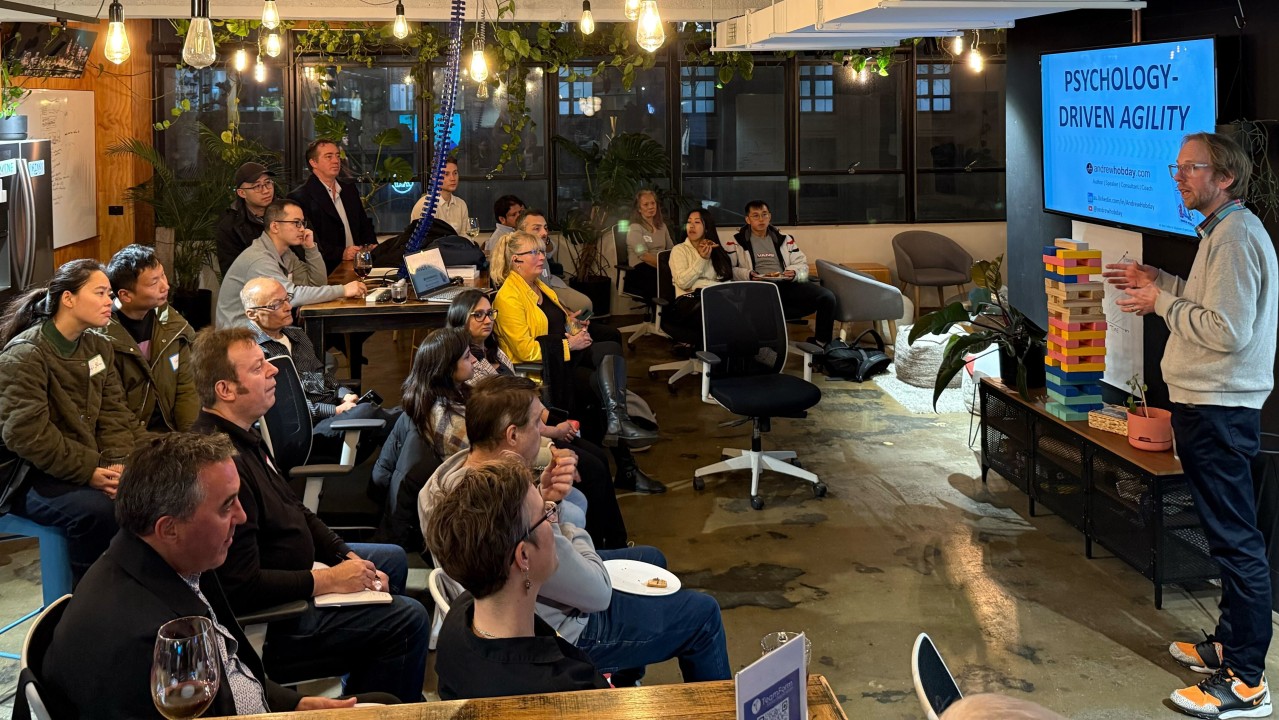
Andrew focused on how we can be aware of — and when necessary counteract — our biases in pursuit of better business outcomes.
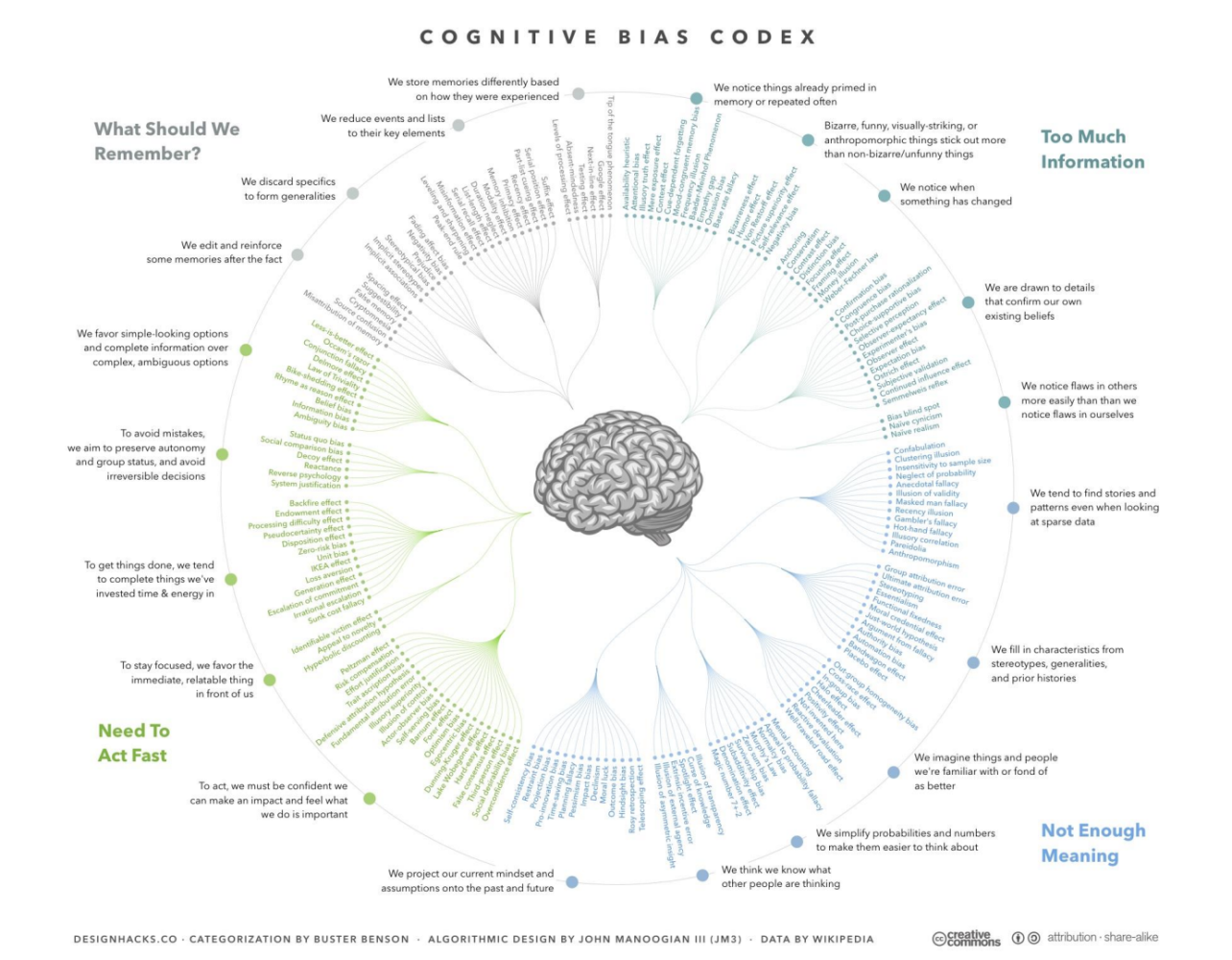
Highlights for me were that biases affect our thinking and influence how we process information and make decisions. Did you know that over 200 biases have been identified in the cognitive bias codex?
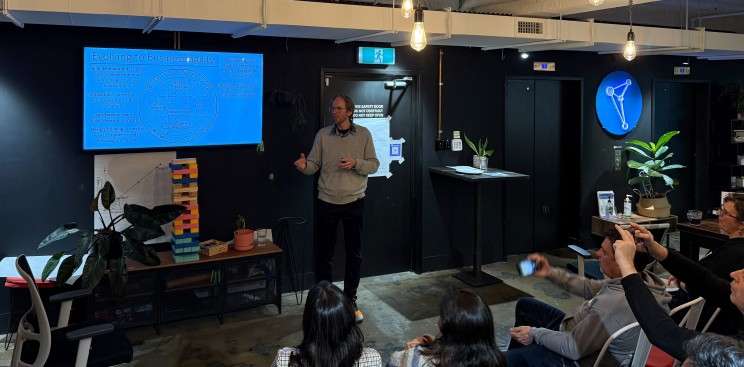
Here are three big ones from the session.
Confirmation bias
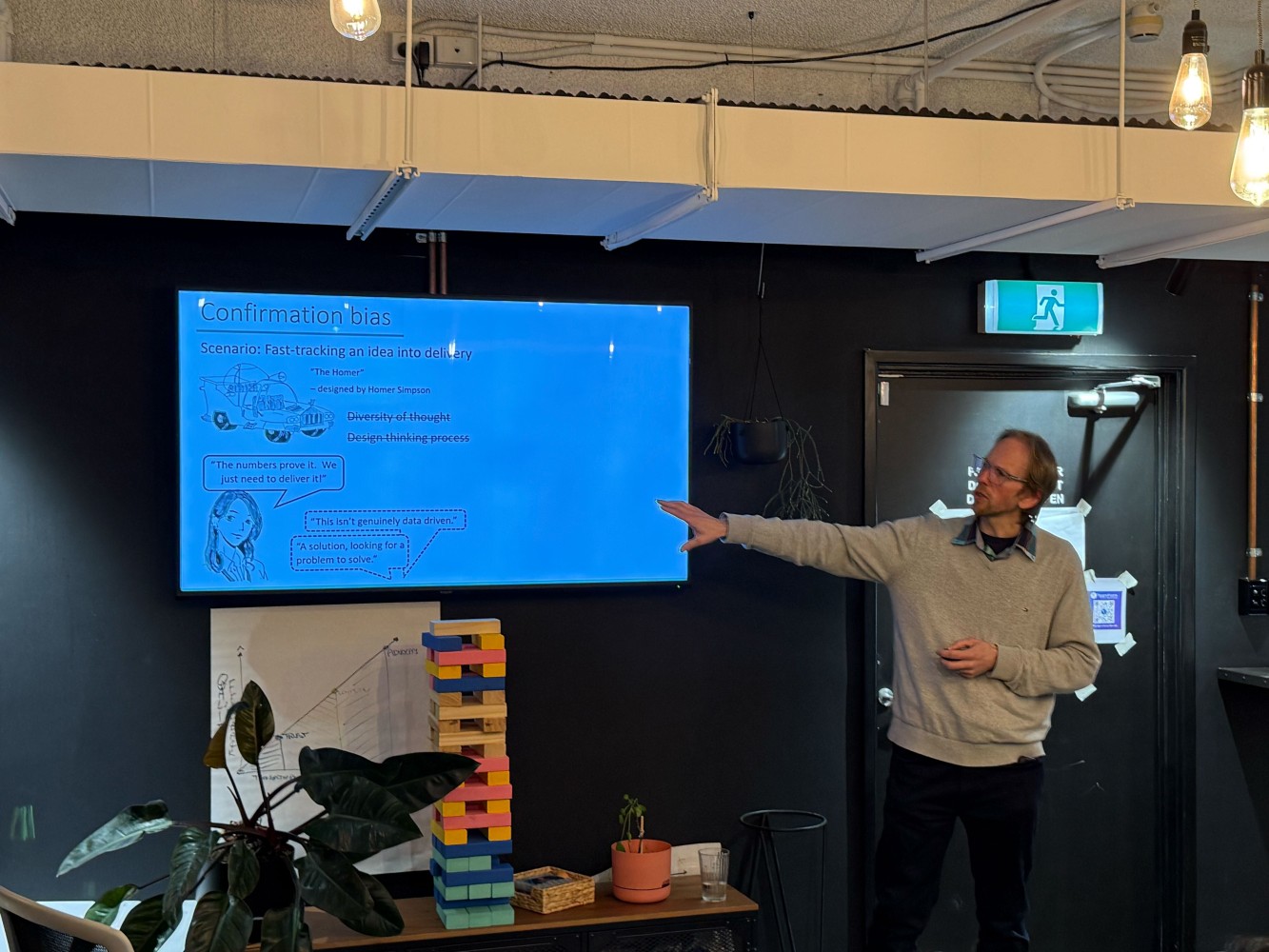
We selectively absorb information (missing deep insights), reinterpret data to suit our biases (impeding intelligent decision-making), and reduce our incentive to robustly understand customers’ challenges (going straight to delivering likely the wrong thing).
We battle confirmation bias by:
- taking a pause to consider alternatives, and interrogate for negatives;
- building a quick options table with pros and cons;
- getting others involved so we don’t just go through the motions of confirming our original idea.
Recency bias
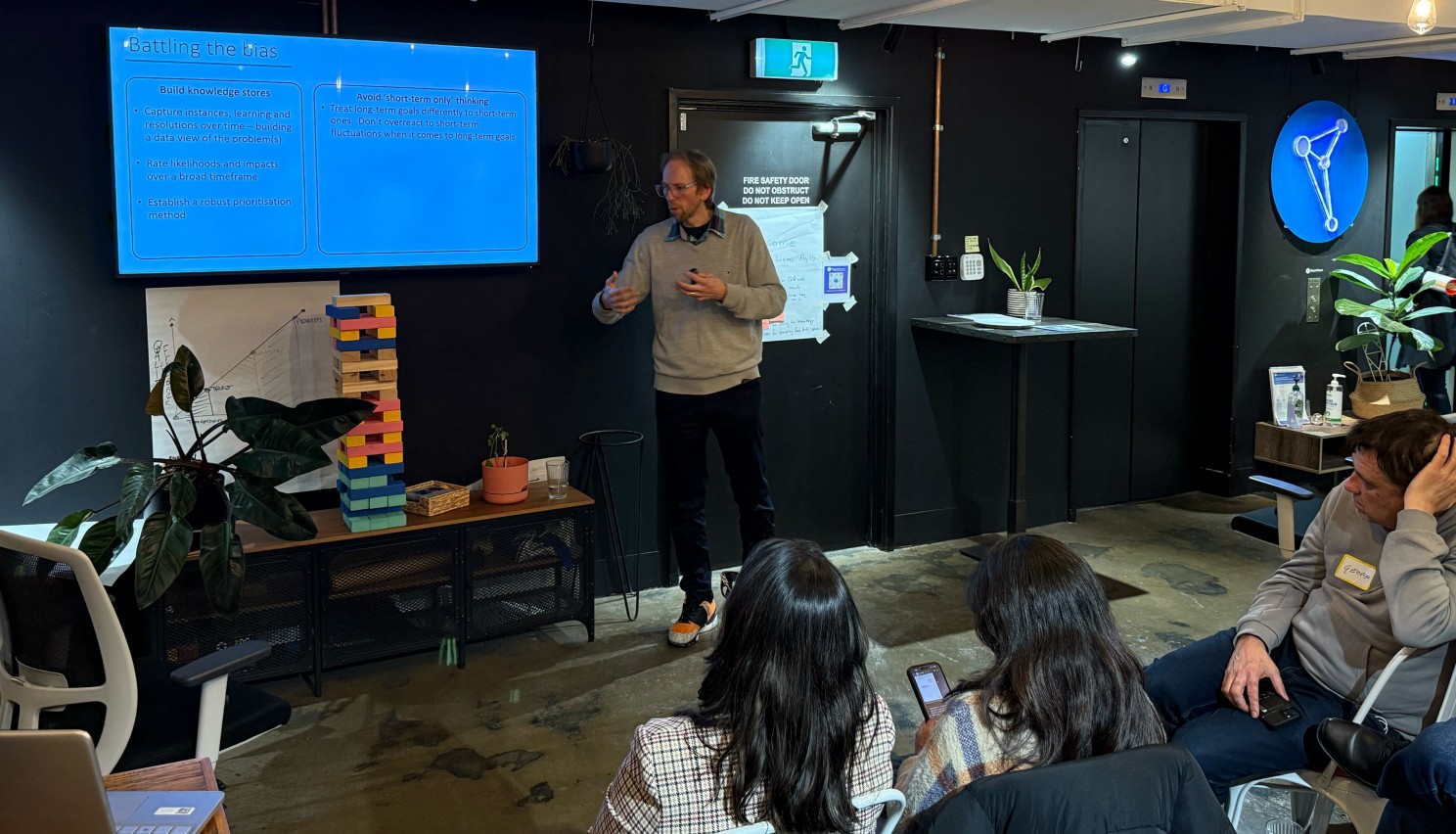
We place greater importance on recent events, meaning we over-index on recently raised pain points and tend to ignore common, recurring problems raised earlier (“retro rage,” much?).
This skewed recall of past events means we miss deep insights available in longer time-horizon data, and impede intelligent decision-making. We may also over-confidently convey thoroughness of analysis (“I had a look, it’s all good — let’s proceed with the original idea!”). That leads colleagues to abandon critical questions and stop short of further consideration.
We battle recency bias by:
- building knowledge stores that capture learning and resolutions over time, and a view of the problem over time — rating likelihood and impact over a broad time frame, and establishing a robust decision-making process;
- avoiding short-term thinking — great long-term goals differently to short-term ones so we don’t over-react to fluctuations; focus beyond the now (e.g. now / next / future and horizon 1 / 2 / 3); recognise that biases are amplified in times of stress.
Sunk cost fallacy
We continue investing in something that isn’t working because of how much has already been invested. (This is my favourite — finding that line is quite tricky.)
What this looks like:
- we focus on past losses rather than potential future gains — skipping deep insights and intelligent decision-making, which ultimately reduces flexibility;
- potentially driven by loss aversion — the fear of losing drives us to focus on avoiding loss more than making gains; affects clarity of purpose (and drives “governance rage” — a major impediment that Maria Muir and our friends at BVSSH lean into).
We battle sunk cost fallacy by:
- collaborating internally and revisiting our purpose to drive decision-making;
- engaging outside help.
Learn more
Andrew Hobday’s book Psychology Driven Agility goes deeper on these themes.
Next month we dove into the Business Agility Institute domains — assessed by behaviours that people and organisations exhibit.
Thanks
- To the team that makes these events possible: Mel Kendell, Isabelle Kluger, Aurelien (Leo) Marando, Martin Chesbrough, Evan Leybourn, Laura Powers, and the Business Agility Institute.
- TeamForm for sponsoring the location and refreshments. Without sponsors these events don’t happen!