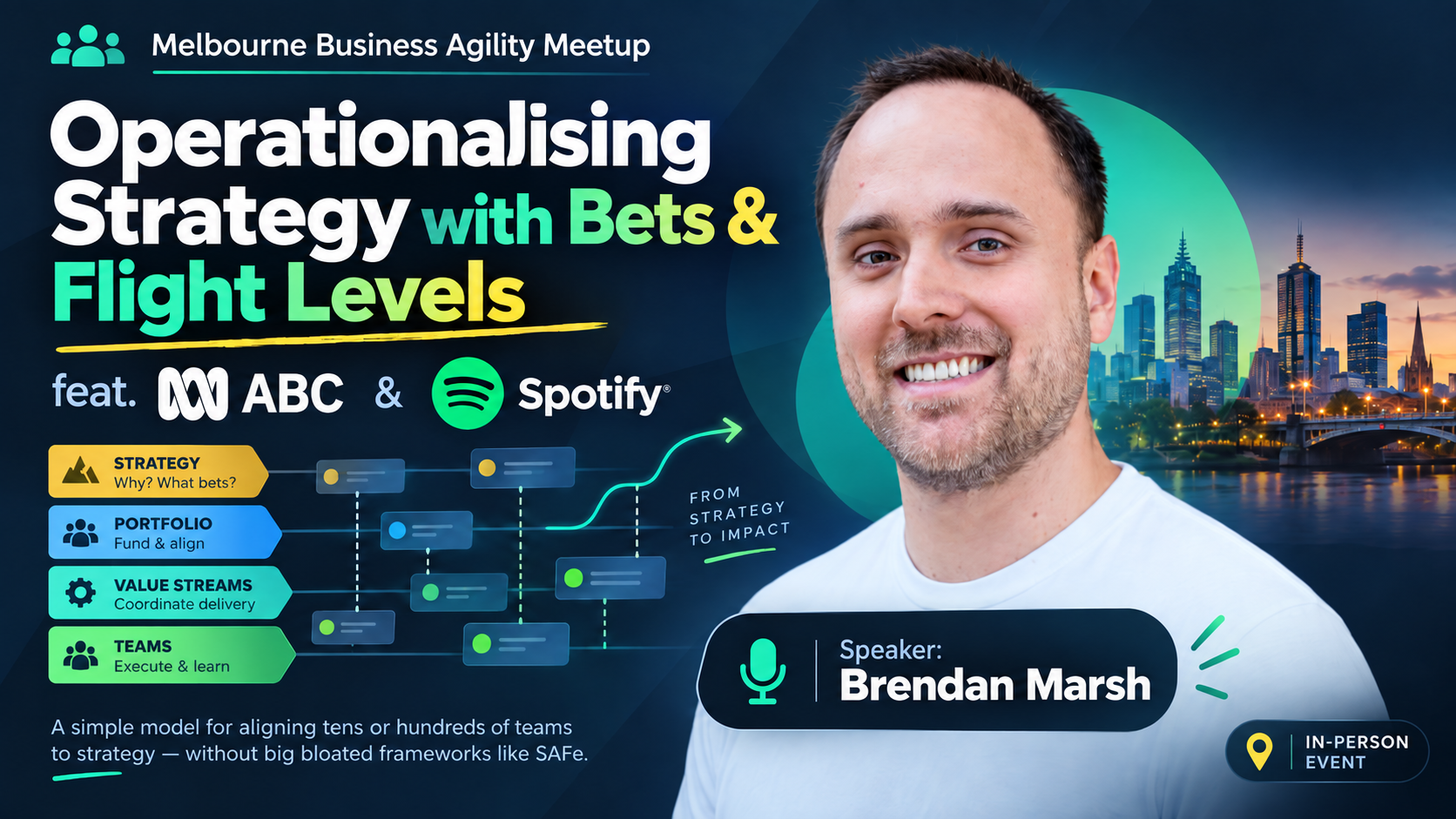
Brendon Marsh on Just Enough Coordination With Bets and Flight Levels
Coordination has a cost
Coordinating teams at scale is hard to do well. Teams need enough broader business context and visibility to work together towards the same outcomes, while retaining enough autonomy to actually get work done.
As organisations grow, the usual response is to add structure: portfolio processes, planning cadences, dependencies, governance and sometimes frameworks such as SAFe. These can solve real problems, but deployed heavily they create their own coordination cost in terms of time, money, attention and opportunity.
So, how do you find the “just enough” point for your organisation, product, people and customers?
Flight levels, and the coordination challenge between scopes of control
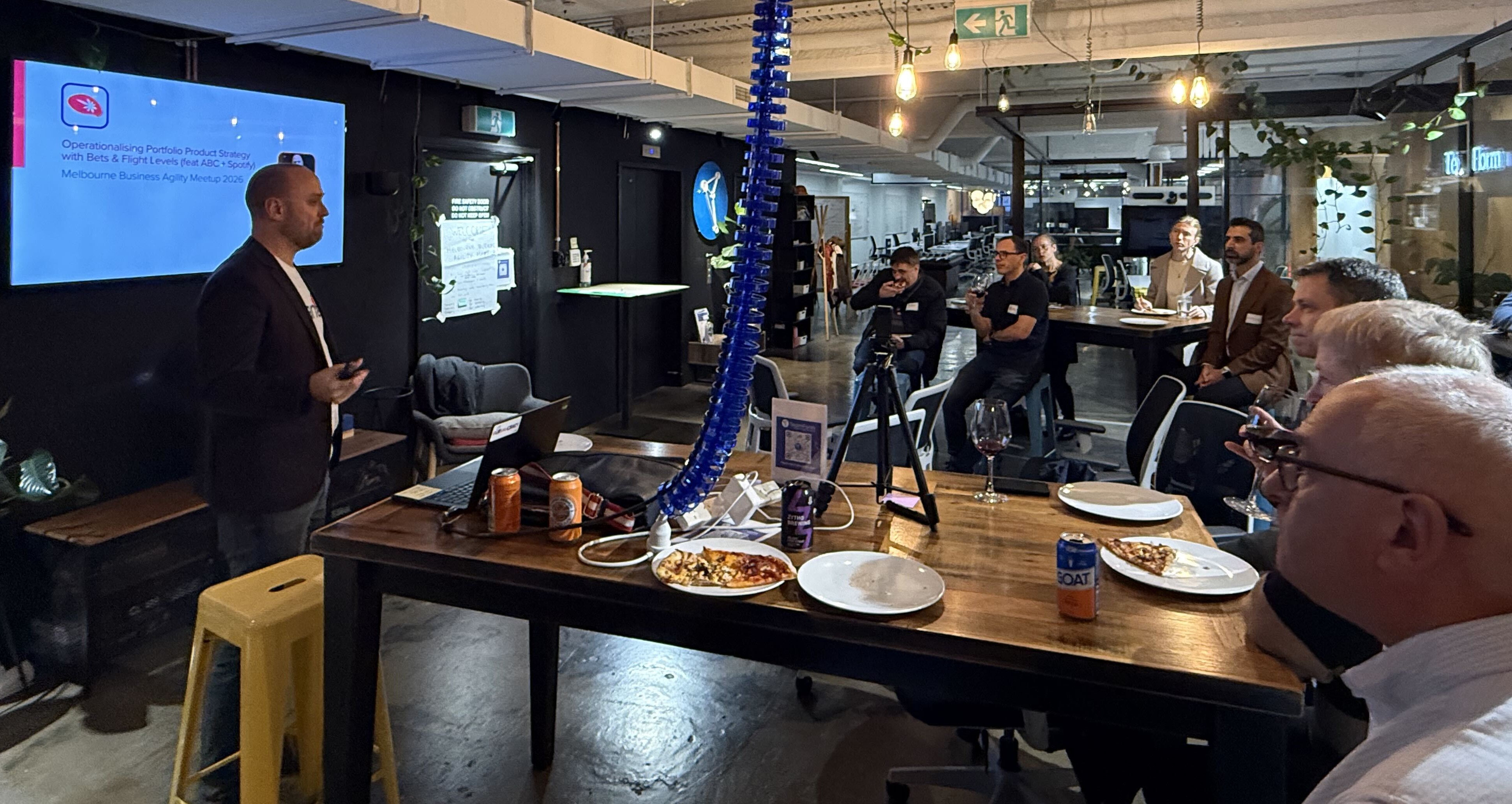
At October’s Melbourne Business Agility Meetup, Brendan Marsh explored this using experience from Spotify and, more recently, the ABC using flight levels
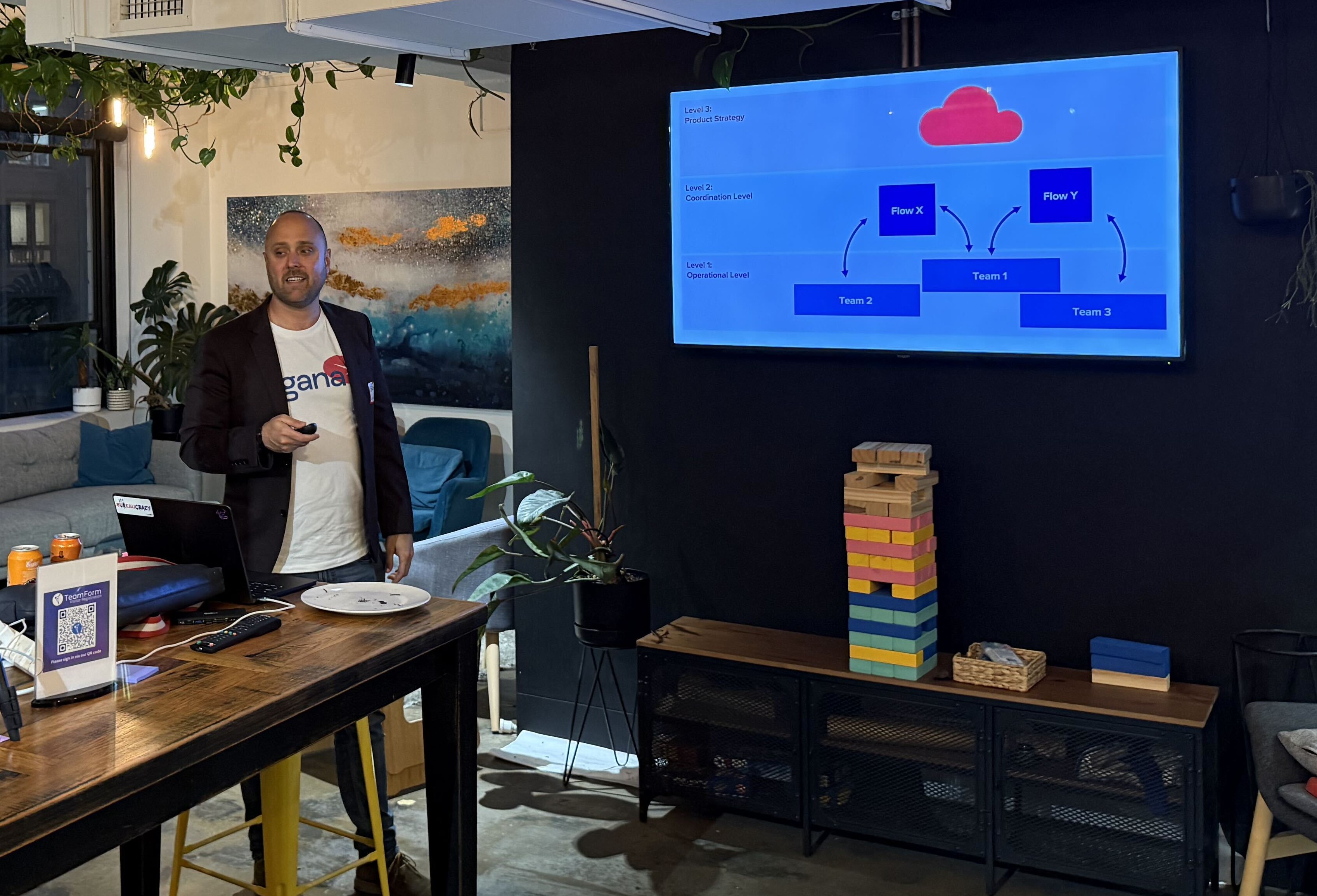
- Level 1: operational, where individual teams and departments do the work
- Level 2: coordination, where work needs to flow across teams and organisational boundaries
- Level 3: strategic, where strategy is formed, translated into choices and connected back to execution
You can find out more about flight Levels on this site.
Brendan spoke to how leaders and teams can often create reasonable alignment inside their own scope of control. The harder coordination problem appears between those scopes: where products, functions, programs and teams depend on one another but nobody owns the whole system.
This aligns nicely with the 2025 Business Agility Report’s finding that without specific focus on cross-area or cross-scope coordination, leaders will do the best they can to improve systems within their span of control, which creates the conditions for coordination challenges where scaled product and service delivery work always crosses scopes.
Bets and Capacity
So how do we improve? By helping to frame context and focus efforts.
At the strategic level, Brendan suggests using a limited set of bets to make strategy tangible: not an exhaustive inventory of everything people could do, but explicit choices about what the organisation will, and crucially will not, work on.
There’s a connection here to Nosh’s earlier idea of the “loving no”.
Bets acknowledge finite human capacity, constrain WIP and make enough space for strategy, coordination and operational work to coexist. Importantly, the model doesn’t pretend maintenance, improvement or unplanned work disappear: they need capacity too.
Finding “Just Enough” Coordination
Perhaps that is the useful thing about Brendan’s approach. It doesn’t prescribe the perfect scaling structure. It gives you a way to expose the work, the dependencies and the choices, and discover how much coordination is just enough for your organisation.